Lamp Light Doesn't Lie: Picking a Rug That Survives the Darker Months

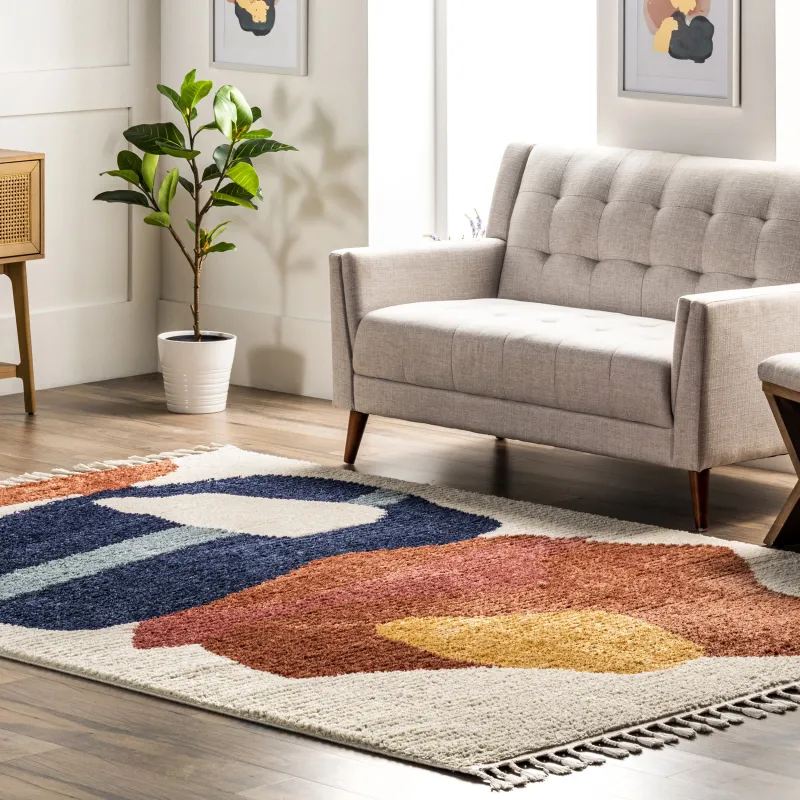
Photo: cozy UK living room rug warm lamp light winter evening, via i.pinimg.com
There is a particular moment in early November when you flick the lamp on, glance down, and wonder whether the rug has been quietly swapped for a different one. It hasn't. The rug is the same. The light is not.
British winters are brilliant at exposing the gap between how a rug looks in a shop or on a screen and how it behaves in an actual home at half four in the afternoon with the curtains closed. The clocks have gone back, the daylight has turned thin and blue, and suddenly every colour decision you made in June is up for review. This is not about buying a new rug every autumn. It is about knowing what to look for so the one you buy works all year.
Why the Same Rug Reads Differently After Dark
Daylight is a broad, fairly honest light. It shows a rug's true colour, texture and pattern. Lamp light is narrower and bossier. It has a colour temperature, it creates pools and shadows, and it flatters some fibres while making others look flat or greasy.
Most UK living rooms run on warm white bulbs, somewhere around 2700K. That kind of light pulls reds, yellows and browns forward. It makes rust, camel and oatmeal feel cosy. It can also make a cool grey rug look faintly purple, and a bright cream rug look yellowed at the edges. Cool white bulbs, closer to 4000K, do the opposite: they sharpen blues and greys and can drain the warmth out of a wool rug that looked lovely in the shop.
The trick is not to fight this. It is to choose a rug that still looks like itself under the light you actually use.
The Three-Question Walk-Around
Before you blame the rug, do a proper five-minute check. Wait until the lamps are on and the curtains are shut — ideally between 4pm and 6pm in winter — then stand in the doorway of the room and ask three questions.
First, does the rug look dirty or shadowed in a way it doesn't in daylight? If yes, the pile may be catching light unevenly. Second, has the pattern disappeared? Some geometric and faded designs turn into a vague haze once the light drops. Third, does the edge of the rug look darker than the middle? That is often a sign of a synthetic pile reflecting a cool bulb rather than a true colour change.
None of these are disasters, but they are useful. A rug that fails all three at 5pm will keep failing all winter.
Wool, Viscose and Synthetic: What Each Does at Night
Wool is the most forgiving fibre in low light. It has a natural depth, so colours tend to deepen rather than flatten, and the texture keeps a bit of life even under a single lamp. A mid-tone wool rug — think oatmeal, mushroom, muted terracotta — is about as safe as it gets for a British winter lounge.
Viscose and art-silk blends are the drama queens. They look gorgeous in daylight and can look patchy or streaky at night, because the shine catches every lamp and shadow. If you love that sheen, keep it in a low-traffic spot and avoid placing it directly under a downlight.
Polypropylene and other synthetics are practical and budget-friendly, but cheaper versions can go slightly blue or flat under cool LEDs. They are not bad rugs; they simply need warmer bulbs nearby to look their best. Jute and sisal warm up nicely but can look dull in a dark corner, so they suit rooms with more than one light source.
Warm Bulbs, Cool Bulbs and the 2700K Rule
If you take one thing from this, make it the bulb check. A warm white bulb around 2700K is the quiet hero of winter interiors. It makes wool look richer, softens the edges of a patterned rug and stops cream from looking like school custard.
Cool white bulbs have their place — kitchens, bathrooms, anywhere you need to see what you are doing — but they are harsh judges of soft furnishings. Try not to mix warm and cool bulbs in the same sightline. If your lounge has a warm lamp on one side and a cool ceiling light on the other, the rug will look like two different rugs depending on where you stand.
North-Facing Rooms Need a Warmer Rug
North-facing rooms get the least direct light and the coolest daylight in the UK. That coolness carries into the evening. A blue-grey rug in a north-facing lounge can look almost navy by 5pm, and a stark white rug can go grey and lifeless.
In these rooms, lean warmer than you think. Oatmeal, camel, soft rust, muted gold and warm greys with a brown undertone all hold their own. If you want pattern, choose something with a warmer ground colour rather than a cool one. The room will feel less like a waiting area and more like somewhere you actually want to put your feet up.
Test at Home, Not Just in the Shop
Shop lighting is designed to sell. Your living room is designed to live in. Order a sample or a small runner if you can, and test it properly: lay it on the floor, turn on the lamps you actually use, shut the curtains and look at it from the sofa, the doorway and standing over it.
Phone photos are not reliable for colour — the camera adjusts everything — but they are useful for comparing one sample against another in the same light. Keep the packaging and check the returns window before you commit. A rug that fails the 5pm test is not a bad rug; it is just the wrong rug for that room.
Room-by-Room Quick Notes
Lounge: Test with every lamp on, including any floor lamp behind the sofa. A warm mid-tone wool rug is the easiest win. If you have a grey sofa, avoid a cool grey rug and go for a warmer greige or oatmeal instead.
Bedroom: Bedside lamps are low and warm, so cream can look yellow and white can look dingy. Oatmeal, soft blush and muted sage tend to hold up well. Test sitting on the bed, not standing at the door — that is the angle you actually see.
Hallway: Often the darkest room in the house, lit by a single cool LED downlight. Choose a forgiving pattern, a darker base colour and a wool or wool-blend pile. Pale flat rugs show every mark and every shadow in a hallway.
The Short Version
Judge a rug at 5pm, not midday. Use warm bulbs where you can. In north-facing rooms, go warmer than feels natural. Wool is kinder than shine in low light. And always test a sample in your own room before you commit. The right rug should not need rescuing every November.