Why Your Bedroom Rug Looks Tiny (and How to Measure It Properly)
There is a particular kind of disappointment that comes from unrolling a new bedroom rug, stepping back, and realising it looks less like a considered design choice and more like a bath mat that has wandered into the wrong room. The rug is rarely the problem. The size is.
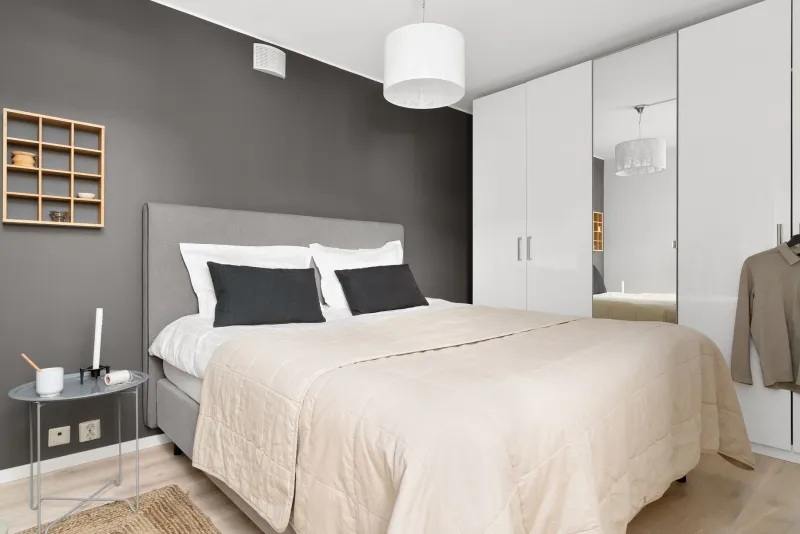
Bedrooms are where rug maths goes wrong most often. In a showroom, a 120 x 170cm rug looks generous. Beside a UK double bed, it can look apologetic. The fix is not to buy the biggest rug you can afford and hope for the best. It is to measure from the bed outwards, then choose a placement that suits the room you actually have.
Start with the bed, not the rug
UK mattress sizes are fairly standard, but bed frames are not. A single mattress is usually 90 x 190cm, a double is 135 x 190cm, a king is 150 x 200cm and a super king is 180 x 200cm. Add a few centimetres for the frame, and a few more if the bed has a chunky headboard, storage drawers or a divan base. Those numbers matter because a rug should relate to the whole bed footprint, not just the mattress.
| Bed size | Typical mattress dimensions |
|---|---|
| Single | 90 x 190cm |
| Double | 135 x 190cm |
| King | 150 x 200cm |
| Super king | 180 x 200cm |
A rug that only covers the middle third of the bed might look fine in a photograph taken from one angle. In daily use, it usually means bare floor where your feet land, a rug that slides about, and a room that feels oddly unfinished.
The 60cm rule, translated for real bedrooms
The useful rule of thumb is this: where you step out of bed, aim for at least 60cm of rug beyond the bed edge. At the foot of the bed, 60 to 75cm gives you a comfortable landing area for slippers, a laundry basket or a few early-morning steps. This is the difference between a rug that merely sits under the bed and one that makes the whole room feel warmer and more deliberate.
Why 60cm? Because feet do not land in a neat line. You swing out, reach for a dressing gown, stand up, turn around. A narrow strip of rug is easy to miss and easy to trip over. If your room is tight, 50cm is a workable compromise on one side, but treat it as the minimum rather than the ideal.
Four placements that solve most UK bedrooms
Fully under the bed
This is the most generous option. The rug sits under the whole bed and extends at least 60cm on both sides and 60 to 75cm beyond the foot. For a double bed, that usually points you towards a rug around 250 x 300cm or larger, depending on the frame. For a king, you may need closer to 270 x 300cm. It looks calm and hotel-like, but it needs floor space and a budget to match.
Tucked under the lower half
A smaller rug can still work if it is tucked under the bottom two-thirds of the bed and extends well beyond the sides and foot. A 200 x 290cm rug can suit a double in a medium room, while a 160 x 230cm rug may be better at the foot of a king if you mainly want a soft landing zone. The key is that the visible rug should not stop short of the bedside tables.
Twin bedside runners
For narrow rooms, two runners are often smarter than one large rug. Look for runners around 70 to 80cm wide and long enough to run alongside the bed, usually 150 to 200cm. They give you warmth exactly where you need it, leave the middle of the room clear and make awkward alcoves feel intentional. In a rented room, they are also easier to move when you do.
A foot-of-bed accent
If the bed dominates the room, a rug placed at the foot can add colour and softness without swallowing the floor. Choose one at least as wide as the bed frame, or slightly wider, so it does not look like a postage stamp. A 160 x 230cm rug is a useful size for a double; a 120 x 180cm rug can work in a single or guest room.
Wardrobe doors, walkways and rented rooms
A bedroom rug should never make a door unusable. Measure the swing of wardrobe doors and the clearance under them before you buy. If a rug is thick, it may catch on a door or make a drawer difficult to open. Low-pile wool, flatweave cotton and washable styles are often easier in tighter rooms.
Leave at least 60 to 75cm of clear walkway between the bed and the wardrobe or wall where you can. If that sounds impossible, choose bedside runners or a foot-of-bed rug rather than forcing a large rug into a space that cannot take it. In rented homes, use a proper anti-slip pad and avoid anything that could mark original flooring. A rug that shifts underfoot is not cosy; it is a daily annoyance.
Budget-friendly choices that do not look budget
You do not need one enormous rug to make a bedroom feel finished. Two well-placed runners can cost less than a single oversized wool rug and often suit narrow Victorian terraces better. A medium rug at the foot of the bed, layered over a neutral carpet, can add warmth without covering every inch of floor. Washable rugs are a sensible choice for guest rooms, renters and anyone who likes a cup of tea in bed.
If you are buying in a sale, check the return policy and measure first. A bargain rug that is 30cm too small is not a bargain. It is a lesson in geometry.
A five-minute measuring check
Measure the bed frame, not just the mattress. Mark 60cm out from each side and the foot with masking tape. Check wardrobe doors, drawer space and the route to the bathroom. Tape the outline of the rug you are considering on the floor, then walk around it in slippers. If you keep stepping over it, it is too small. If it blocks a door or makes the room feel cramped, it is too big.
A bedroom rug should make getting out of bed feel kinder on a cold morning. Get the size right and even a simple wool runner can do more for the room than a beautiful rug that is always the wrong shape.