Stop Saving the Good Rug for Best: Everyday Comfort Beats a Show Home
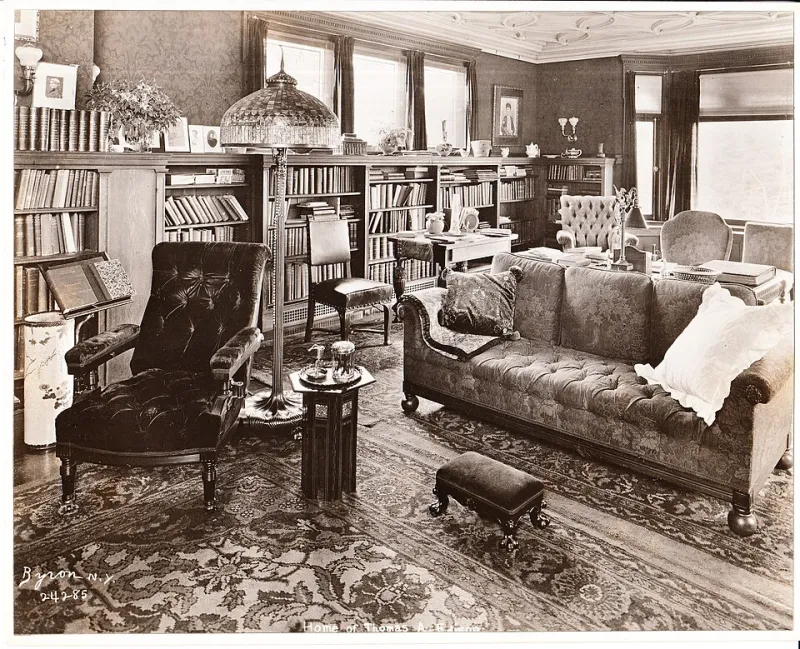
Photo: Unknown authorUnknown author, Public domain, via Wikimedia Commons
There is a very British instinct that says the good rug belongs in the good room. It is the one covered in a sheet, rolled out for Christmas, or kept for guests who somehow never arrive. Meanwhile, the family piles onto a thinner rug in the room where actual life happens. In 2026, with more of us working from home, eating on the sofa and using every square metre of our flats and terraces, that habit deserves a rethink.
The best rug in your house should be under your feet every day. Not because show-home perfection is bad, but because it is not the point. A rug is a piece of furniture that works hardest when it is walked on, sat on, spilled near and vacuumed regularly. Saving it for best is a bit like keeping a favourite chair in the garage.
The myth of the untouched front room
The formal parlour is not a new idea. Victorian and Edwardian homes often had a best room for receiving visitors, while daily life happened elsewhere. But most of us do not live in houses with a spare reception room and a housemaid to keep it polished. Today the 'good room' is often a box room, a home office, a dining room that gets used twice a year, or a lounge that has been quietly taken over by laundry.
If the best rug is in a room nobody uses, it is not being protected. It is being wasted. Rugs can fade in sunlight, gather dust and even attract moths when left undisturbed. A wool rug that is regularly walked on and vacuumed is often healthier than one that sits in silence behind a door.
Stain fear is doing the heavy lifting
Most of us have a stain story. Red wine, muddy paws, a child with a felt-tip pen, a plate of curry that made a bid for freedom. The fear of that moment is why so many beautiful rugs stay wrapped up or why people buy a beige rug they do not really like and then worry about it anyway.
But stain fear is often based on myths. Wool is not automatically fragile. It has a natural outer layer that helps dirt sit on the surface rather than sink in immediately. The real enemy is usually panic: rubbing a spill into the fibres instead of blotting it up. A clean cloth, cool water and a gentle detergent will handle many everyday accidents. For bigger problems, a professional clean is rarely the disaster people imagine.
Washable rugs have also changed the conversation. A machine-washable cotton or synthetic rug is not a compromise if it means you can actually relax. In a busy family home, a rug you can clean is a rug you can love. The same goes for mid-tone patterns, textured weaves and darker colours that hide the honest evidence of daily life.
What a daily-use rug actually needs
A rug for real life does not need to be precious. It needs to be practical. Wool and wool-blend rugs are warm, hard-wearing and naturally flame-resistant, which makes them a sensible choice for living rooms and family spaces. Washable styles are excellent for dining areas, pet-heavy homes and anyone who likes to eat on the floor. Low-to-medium pile is easier to vacuum and less likely to trap crumbs than a deep shag.
A good anti-slip underlay is just as important as the rug itself. It keeps the rug flat, protects the floor and makes cheap rugs feel more expensive. Rotate the rug every few months so the wear is even. Vacuum gently rather than aggressively, and deal with spills quickly. These are small habits, not a full-time job.
Cleaning myths that keep rugs in storage
One myth is that wool rugs cannot be vacuumed. They can, with a gentle setting and no aggressive beater bar. Another is that any liquid will ruin wool. In reality, wool can handle careful spot cleaning and professional cleaning. A third myth is that washable means indestructible. Washable rugs still need the care label followed properly, and they still appreciate a quick blot before a full cycle.
The biggest myth of all is that a rug should be saved for a special occasion. A rug is not a wedding dress. It is a floor covering with a job to do. If you love the colour, the texture and the way it makes the room feel, then the special occasion is Tuesday evening with a boxset and a cup of tea.
Comfort is a daily dividend
Bare floors are cold, echoey and hard underfoot. A rug softens sound, adds warmth and makes a room feel finished. In a family home, that matters more than a perfectly styled corner that nobody touches. Children play on rugs. Dogs sprawl on them. Guests sit on them. They are part of the furniture of everyday life.
A show-home living room can be beautiful, but it can also feel like a display. The rooms we remember are usually the ones where someone put their feet up. A rug that has been lived on has a story. It has a slightly worn patch where the sofa sits, a faint mark where a glass went over, and the unmistakable softness of a textile that has been broken in by real people.
Use the good rug, then use it again
The practical answer is not to be reckless with an heirloom. If a rug is genuinely fragile, sentimental or valuable, by all means care for it. But for most of us, the best rug in the house is the one we bought because we loved it. Put it in the busiest room. Add an underlay. Keep a stain cloth in the cupboard. Vacuum it without ceremony. Let the dog lie on it.
When guests do arrive, they will not admire a rug that has been preserved in bubble wrap. They will feel the warmth of a home that is actually being lived in. That is a far better welcome than a perfect room nobody is allowed to enjoy.