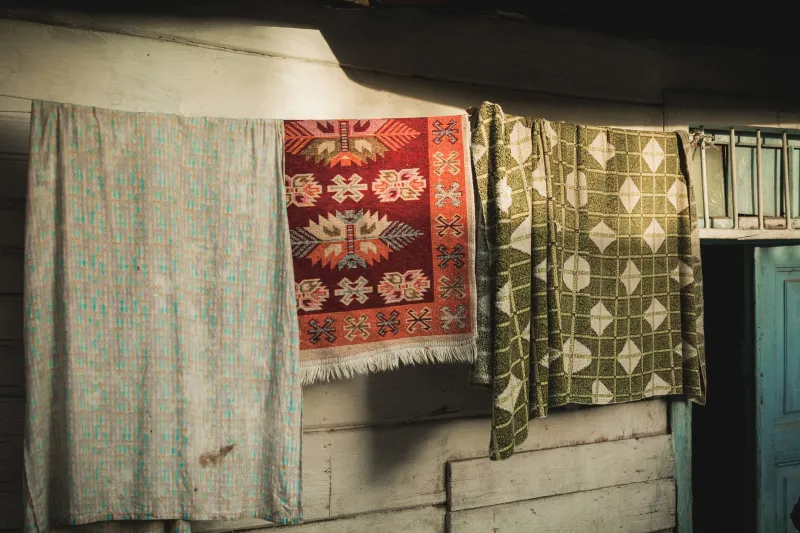
Your Landing Is a Room, Not a Corridor: A Rug Plan for the Top of the Stairs
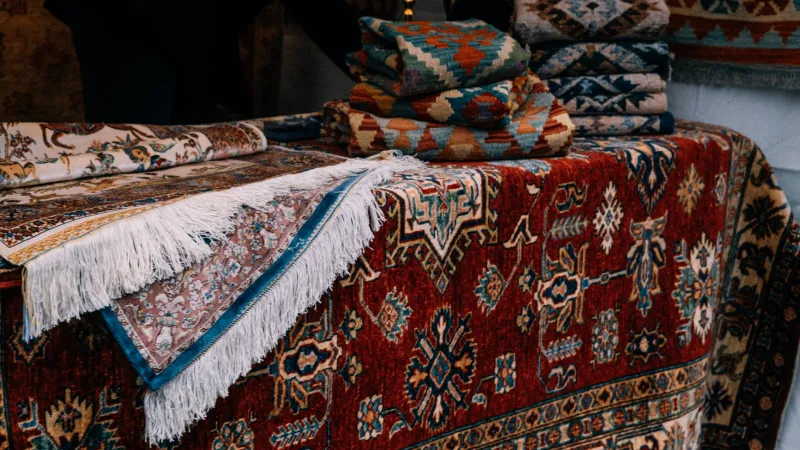
Most UK homes have a room that nobody quite admits is a room. It has a radiator that never gets bled, a patch of bare floorboards that creaks in a very specific way, and a view straight into the airing cupboard. It’s the landing — and it’s usually the last place anyone thinks to soften.
We spend months choosing a lounge rug that ties the sofa together, then leave the top of the stairs as a wind tunnel with a dodgy bit of carpet gripper. That’s a shame, because the landing is the one space you cross in bare feet at 2am, in socks on a Sunday morning, and at speed when the doorbell goes. It deserves better than being treated like a corridor with a window.
The landing is doing more work than you think
A landing is a thoroughfare, a light well, a laundry drying zone and — in plenty of British terraces — a makeshift office or book nook. It also acts as a buffer between the warm rooms below and the colder bedrooms above. Bare boards or a thin, tired carpet make that buffer feel like a fridge shelf.
A rug won’t solve a badly insulated house, but it does three practical things: it takes the shock out of a cold floor, it quiets the thud of footsteps, and it stops the landing feeling like the bit of the house where nice things go to die. Think of it as a small, high-impact soft furnishing buy rather than a full decorating project.
Runner, rectangle or a pair of small rugs?
The right shape depends on your landing’s layout, not its square footage. Long, narrow landings suit a runner — ideally with a bit of breathing room at each end so it doesn’t look like a carpet offcut that got stuck. Wider landings, especially those with a window or a reading chair, can take a small rectangular rug. L-shaped landings often work best with two smaller rugs: one along the main stretch, one at the turn. That also makes the space feel deliberately zoned rather than endlessly corridor-ish.
Avoid anything too chunky. A deep shag pile on a landing is a magnet for dust, a nightmare around door swing, and a genuine trip hazard at the top of stairs. Low-pile wool, flatweave cotton, or a tight synthetic blend are the sensible choices. They still feel warmer underfoot than bare boards, but they don’t grab socks or catch under a hoover.
Safety first, style second (but you can have both)
Any rug near the top of stairs needs to stay put. Really put. A curling corner is annoying in a lounge; on a landing it’s an accident waiting to happen.
For owners, a proper anti-slip underlay is the gold standard. It adds a bit of cushioning, stops the rug creeping, and makes a budget runner feel more expensive than it was. For renters, go for a non-marking anti-slip pad or a grippy rug tape that lifts cleanly — check it on a hidden patch of floor first. Avoid anything that needs nails or adhesive on original floorboards unless you’re happy to lose your deposit.
If you’re fitting a stair runner as well as a landing rug, fixings matter. Stair rods look smart but can rattle; staple-and-tack systems are secure but not renter-friendly. A good compromise is a runner held with tension rods or a professional-fit gripper system, and a separate landing rug that doesn’t rely on the stairs to stay flat. Keep the pile low enough that it doesn’t interfere with the stair nosing, and never let a rug overhang the top step.
Measuring the awkward bits
Landings are rarely nice neat rectangles. You’ve got radiator pipes, cupboard doors, a slanting ceiling, and that one corner where the hoover can’t reach. Measure the clear floor space, not the room’s maximum dimensions. Leave at least 5–10cm between the rug edge and the skirting so the floor still reads as a border, and check door clearance before you fall in love with a thick woven number.
For an L-shaped landing, sketch the floor on paper and mark the walking route. That line is where the rug should go. If the turn is tight, a single large rug will either buckle or leave a bare patch. Two smaller rugs can follow the route and make the space feel intentional. For a straight landing, measure the longest clear run and subtract 30–40cm so the runner doesn’t look crammed wall to wall.
Budget-friendly ways to make the top of the stairs feel considered
You don’t need a bespoke runner to improve a landing. A standard runner in a low-pile wool blend can cost less than a takeaway for four, and a small flatweave rug at the turn is often cheaper still. Remnant bins and end-of-line rolls are worth a look if you’re happy to trim and bind a length — many local carpet shops will do this for a small fee. A simple anti-slip pad underneath makes a £30 runner feel like a considered purchase rather than a stopgap.
Colour-wise, the landing is a good place to be a bit braver than the lounge. It’s a small space, so a stripe, a subtle check or a warm terracotta won’t overwhelm it. If the landing is dark, a lighter rug will bounce a bit of light back; if it’s a bright south-facing oven in summer, a mid-tone or slightly cooler shade stops the space feeling bleached. And if the floorboards are original and a bit wonky, a patterned rug hides more than a plain one.
The small room you never knew you had
A landing rug isn’t going to change your energy bill or magically insulate a Victorian terrace. But it will make the top of the stairs feel like somewhere you live, rather than somewhere you pass through on the way to a better room. Start with a low-pile runner, get the grip right, measure the awkward turn honestly, and spend what you can. The landing has been patient. It’s earned a bit of warmth.