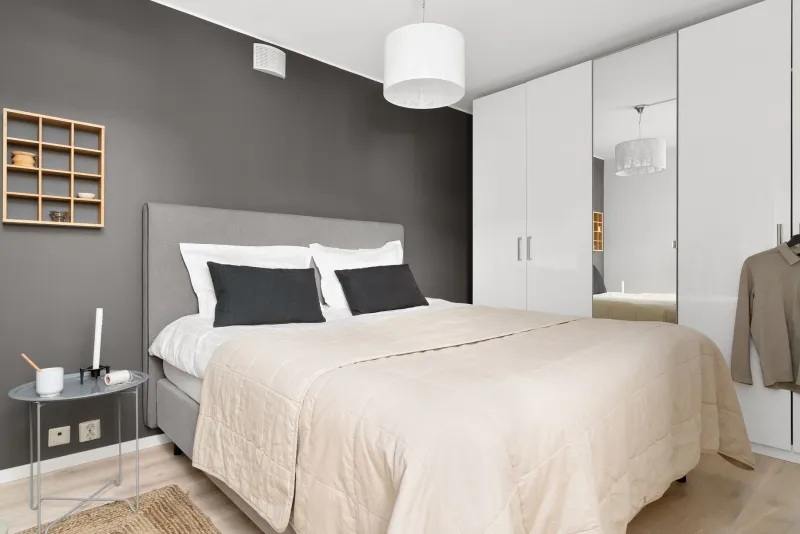
Laptop by Day, Guest Bed by Night: The Spare-Room Rug That Does Both Jobs
In 2026, the spare room is rarely just a spare room. It is the place where you take video calls, stash the ironing, wrap Christmas presents in secret and, every so often, persuade a guest that the sofa bed is genuinely comfortable. In a UK home short on square metres, that little box room off the landing has to earn its keep.
The rug in that room has a harder job than most. It has to soften a space that is half workplace and half bedroom, survive a swivel chair without looking like a badger has been at it, and still feel warm enough that a guest does not spend the night wondering whether they have been put in the utility room. Get it right and the room quietly does both jobs. Get it wrong and you will be buying a replacement before the next bank holiday.
Start with the bed, not the desk
It is tempting to plan the office corner first because that is where you spend the most time. But the bed is the awkward customer. Pull-out beds, sofa beds and folding guest beds all need clear floor to do their thing. A thick, deep-pile rug underneath a pull-out mechanism is a recipe for a jammed frame and a very apologetic morning.
If your guest bed pulls out towards the middle of the room, keep the main rug forward of the mechanism and treat it as a landing pad at the foot of the bed. That gives guests somewhere warm to put their feet without the rug fighting the bed frame. If the bed is a fixed single, you can run the rug underneath, but check the legs first. Some divan bases and metal frames are happier on a grippy underlay than on a loose rug.
For a sofa bed that opens lengthways, measure the full extended footprint before you buy anything. Then add a good 30cm of breathing room. A rug that stops short of the fold-out zone is better than one that has to be rolled up every time someone visits.
The desk zone is where rugs go to die
Office chairs are brutal. A five-star castor base rolling back and forth for eight hours a day will flatten a fluffy rug in a fortnight and shred a loose weave in a season. If you have ever wondered why the spare-room rug looks tired before its time, the chair is usually the culprit.
For a working spare room, choose a dense low-pile wool or a tight flatweave. Wool blends are warm underfoot but hold their shape far better than long shag. A rug with a proper backing and a non-slip underlay will also stop the whole thing migrating towards the door every time you push back from the desk.
Placement matters as much as material. The rug should extend at least 60cm to 75cm behind the chair so the castors stay on the rug rather than constantly rolling on and off the edge. That half-on, half-off movement is what curls corners and frays bindings. In a small room, a 120x170cm rug can work if the desk and chair sit squarely on it, but a 160x230cm rug gives you more margin for error and makes the room feel less like a corridor with furniture in it.
If you are on a hard floor, felt glides under desk legs will save the floor and reduce noise. Castor cups are useful for static furniture, but they are no good for a chair you actually roll. A dense rug plus underlay is the practical answer, with a chair mat only if you can live with the look of it.
One rug or two?
In a spare room, one rug usually beats two. Two small rugs can make a narrow room feel choppy, and there is nothing cosier than a guest stepping out of bed onto a cold patch of floor because the rug stopped 20cm short.
A single rug centred between the bed and the desk can anchor the whole room, as long as it does not block the door swing or disappear under a radiator. If the room is genuinely long and thin, a runner beside the bed and a small rug under the desk can define the two zones, but keep the colours close so it reads as one scheme rather than two rooms fighting under the same ceiling.
Make it feel like a bedroom by six o'clock
The rug is the foundation, but the conversion from office to guest room happens in the soft furnishings. A throw folded on the end of the bed, a couple of cushions, a bedside lamp and a tray for glasses and a glass of water all signal that this is a room for resting, not just replying to emails.
Keep a basket or ottoman for laptop cables, notebooks and the stack of post you have been meaning to deal with. When the working day ends, the laptop goes in the basket and the room gets its evening personality back. A warm wool rug underfoot does more for that transformation than almost anything else, because it changes the sound of the room as well as the look. Bare floors and hard desks bounce noise about; a rug softens footsteps and makes the space feel occupied in a friendly way.
The UK practicalities
Most spare rooms are north-facing, small, and sit above a cold hallway. That is exactly why a rug earns its place. Wool is the natural choice for warmth and durability, though a good recycled PET or dense synthetic can work if the budget is tighter. Avoid anything too thick under a desk chair, and avoid anything too precious in a room where a guest might wheel a suitcase across it.
If you have underfloor heating, check that the rug and underlay are suitable. If you rent, choose a rug that sits happily over existing carpet with a gripper rather than anything that needs fixing down. And if the radiator sits low on the wall, leave a gap so the heat can still move around the room.
A quick buying checklist
Measure the extended bed footprint, the chair roll zone and the door swing before you shop. For a small spare room, 120x170cm is the minimum sensible size; 160x230cm is better if it fits. Look for a dense low pile, a non-slip backing or separate underlay, and a colour that works with both the desk setup and the guest bedding. Rotate the rug every few months and vacuum it regularly, because office chairs and bedroom slippers both leave their mark.
A spare room should not feel like a compromise. With the right rug, it can be a study by day, a bedroom by night and a genuinely warm corner of the house in between.